Measure first, then decide. The EPA says indoor humidity should stay below 60 percent, and ideally between 30 and 50 percent. A nursery reading inside that range needs neither a humidifier nor a dehumidifier. A reading outside it tells you which one, if either, fits.
Los Angeles makes this less obvious than it sounds. A coastal bedroom with the windows shut and an inland one during a Santa Ana wind can sit at very different readings, and an air conditioner that is too big for the room can leave the air cool and still damp. Here is how to find out which room you have.
Key takeaways
- A hygrometer comes before any device. A small digital one at crib height shows the real number.
- Target 30 to 50 percent, and stay below 60 percent, the EPA’s figures.
- Below 30 percent: a humidifier may fit, sized to the room.
- Above 60 percent: look for the cause first, then a dehumidifier if it persists.
- An oversized cooling unit is a common cause of a damp room. It stops before it has run long enough to dry the air.
Which device fits your reading?
| Reading at the crib | What it suggests | First step |
|---|---|---|
| Below 30 percent | Dry air, often in a Santa Ana wind or with heating on | Confirm over several days. A humidifier sized for the room may fit. |
| 30 to 50 percent | The EPA’s ideal range | No device needed. Keep measuring. |
| 50 to 60 percent | Inside the EPA ceiling but climbing | Watch it. Check airflow, door position and cooling-unit size. |
| Above 60 percent | Above the EPA limit | Find the cause. A dehumidifier is the stopgap, not the fix. |
Our baby room humidity guide explains how to measure at the crib and what moves the number in Los Angeles.
If the room is too dry
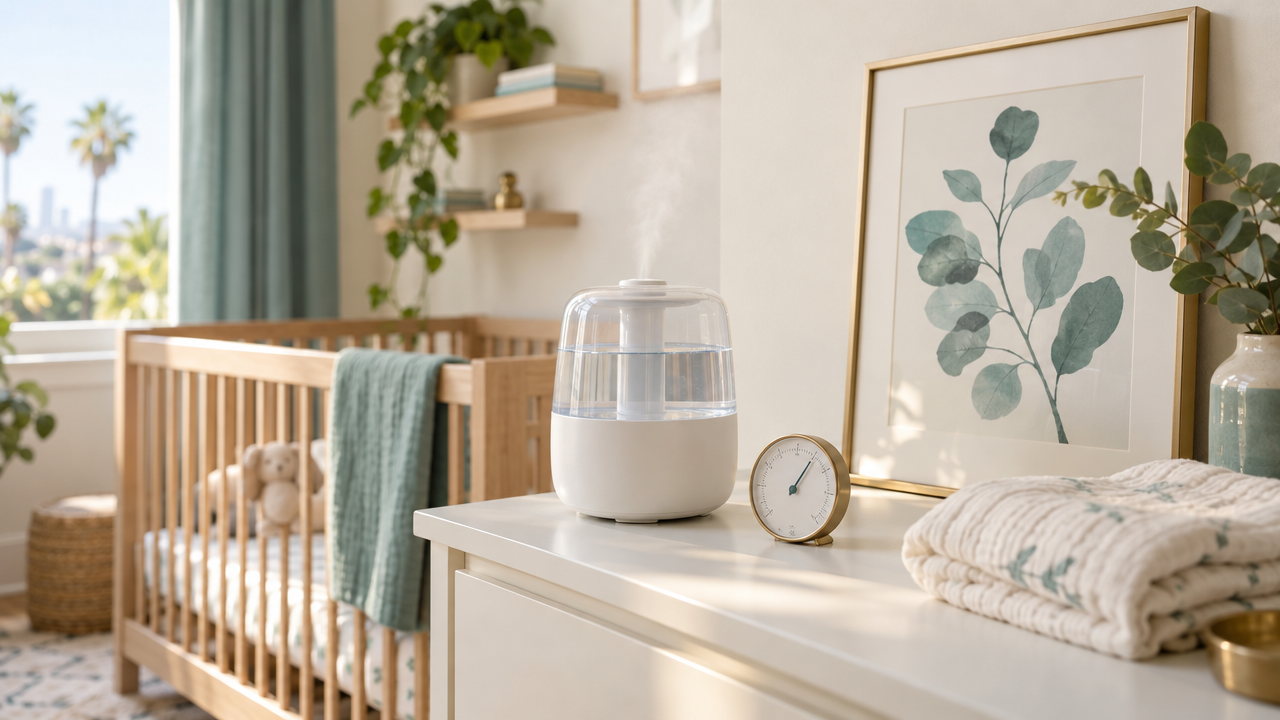
- Add moisture only against a reading. Running a humidifier in a room that was already in range pushes it toward the top.
- Size the unit to the room. Use the manufacturer’s room-size rating.
- Keep it clean and out of reach. Follow the maker’s cleaning schedule, and keep the unit and its cord away from the crib.
- Re-read after a few days and stop if the room reaches 50 percent.
If the room is too damp
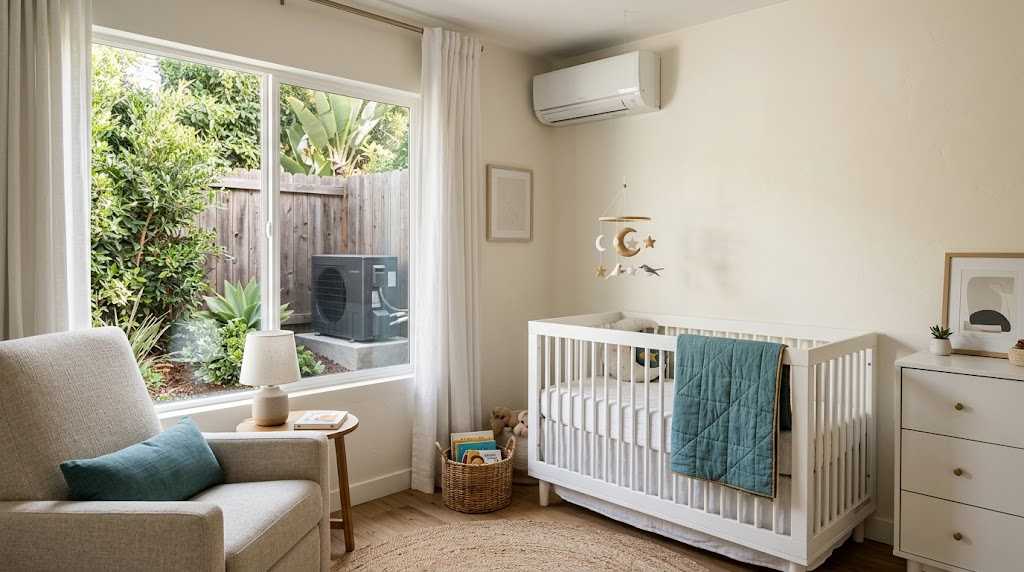
- Check the cooling unit first. A unit larger than the room needs cools it fast and shuts off before pulling moisture out. See what size mini split a child’s room needs.
- Check the room’s airflow. A closed room with an upstairs heat load behaves differently from an open one.
- A dehumidifier can bridge the gap while the cause is fixed.
How Little Lungs handles humidity
On a Free Air Check we log temperature and humidity at the crib. In Nursery Climate Design the target range and the unit’s size are written into the plan, and after the Certified Install we read the room again and give you the numbers in writing. Temperature and humidity are one decision; see what temperature a baby’s room should be.
Questions parents ask
Does a baby’s room need a humidifier?
Only if a hygrometer reading shows the room is below the 30 to 50 percent range the EPA gives as ideal. Measure at the crib for a few days first, including overnight.
Does a baby’s room need a dehumidifier?
Only if readings run above 60 percent, the upper limit the EPA recommends for indoor humidity. If the room is only occasionally high, fixing the cause, such as an oversized cooling unit or a closed room, comes first.
What is the best humidity for a baby’s room?
The EPA says indoor humidity should stay below 60 percent, ideally between 30 and 50 percent. Aim for that range and measure at the crib.
Can a mini split control humidity?
A correctly sized air conditioner removes moisture as it cools. An oversized one cools the room before it runs long enough to do so, which can leave the air cool and damp. That is one reason sizing the unit to the room matters.
Know their room’s real number
We’ll measure the nursery and tell you plainly whether anything needs adding, removing or resizing.
Sources
- U.S. Environmental Protection Agency — A Brief Guide to Mold, Moisture, and Your Home
- ENERGY STAR — Room air conditioners (an oversized unit cools quickly and removes less moisture)